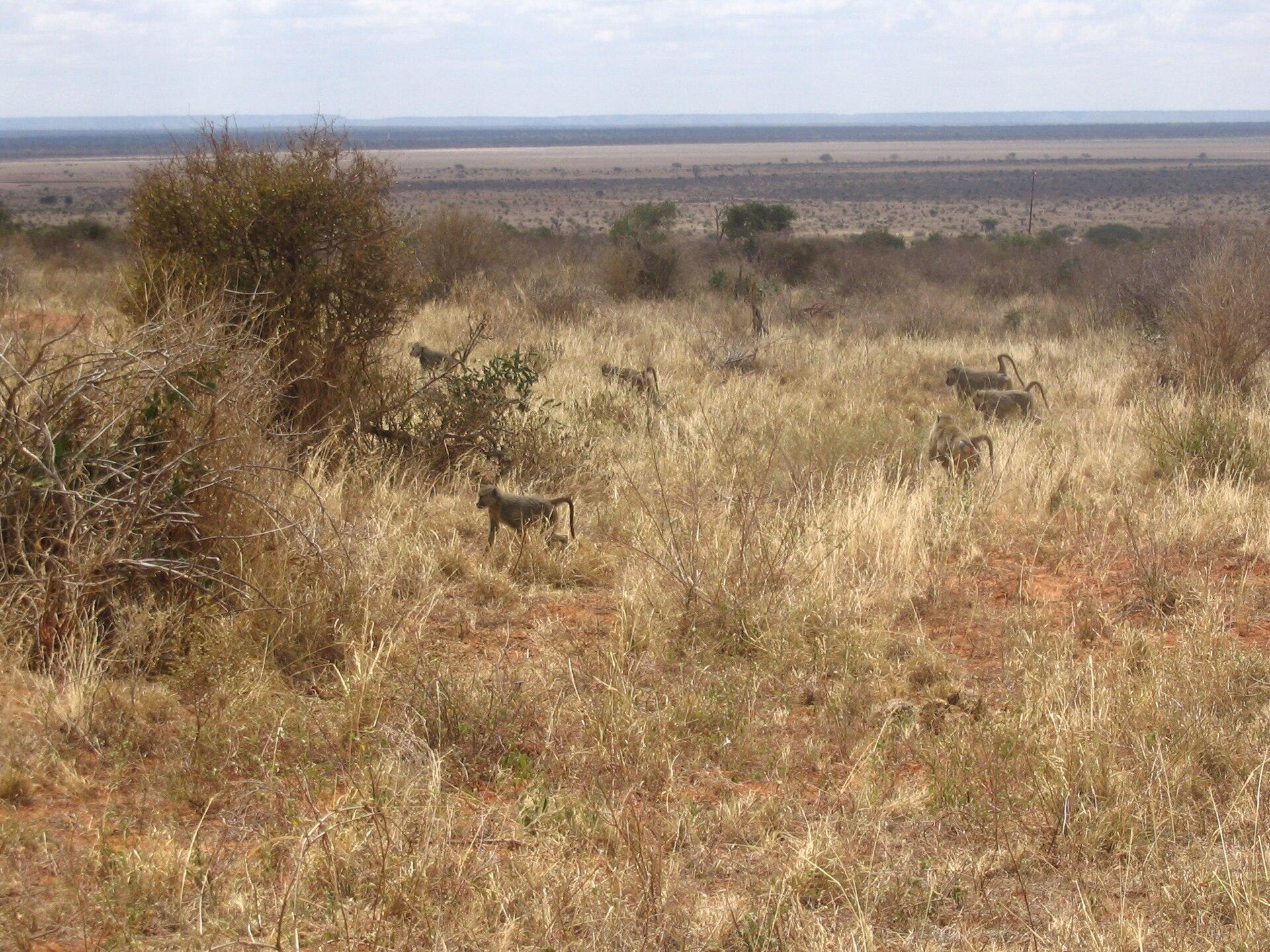
Tsavo East National Park
Red-dust wilderness on a vast scale, with elephants the colour of the earth they roll in.
Overview
Tsavo East is one of the oldest and largest protected areas in Kenya, covering some 13,700 square kilometres of flat, semi-arid bush between Nairobi and the coast. Its signature is the colour: the soil is a deep ochre red, and the elephants dust themselves in it until they glow. This is open, thorny, unmanicured country - not the manicured game viewing of the Mara, but genuine wilderness where you can drive for an hour without seeing another vehicle. The Galana river cuts across the park and holds hippo and crocodile; the Yatta Plateau, a 300-kilometre lava flow, is one of the longest in the world; and Lugard Falls is a set of water-carved rock formations worth stopping for. Elephant, buffalo, lion, and the dry-country specialists - gerenuk, lesser kudu, fringe-eared oryx - are all present, though bush density means sightings take patience. Aruba Dam and Mudanda Rock are the reliable dry-season waterholes.
Browse by category in Tsavo East National Park
Photos of Tsavo East National Park
What Tsavo East National Park costs
All-in on the ground, per person per day, excluding international flights. Ranges rather than a single figure, because accommodation and group size move the total more than anything else.
| Style | Per person, per day |
|---|---|
| Camping or budget lodge, shared vehicle | $140 – $200 |
| Mid-range lodge | $200 – $360 |
| Luxury camp, private vehicle | $500 – $1,000 |
Of that, $52 – $90 a day is government fees set by Kenya Wildlife Service. Every operator pays the same, so a quote below this floor is not a better deal — it is a different trip.
Add this to a whole-trip estimate
Indicative figures checked for 2026. Park fees are revised annually and some are quoted before VAT — confirm current rates with your operator or the park authority before you book.
When to visit Tsavo East National Park
Month by month: wildlife, weather and how busy it gets.
October
Dry season — good roads, thinner bush, animals gathering at water.
- Wildlife
- Wildlife: 4 / 5
- Weather
- Weather: 4 / 5
- Crowds
- Crowds: 2 / 5
- Rainfall
- 40 mm
- Temperature
- 20–36 °C
Show all twelve monthsHide the full table
| Best time to visit | Wildlife | Weather | Crowds | Rainfall | Temperature |
|---|---|---|---|---|---|
| JanuaryDry season — good roads, thinner bush, animals gathering at water. | Wildlife: 3 / 5 | Weather: 4 / 5 | Crowds: 2 / 5 | 40 mm | 20–35 °C |
| FebruaryDry season — good roads, thinner bush, animals gathering at water. | Wildlife: 3 / 5 | Weather: 4 / 5 | Crowds: 2 / 5 | 30 mm | 21–36 °C |
| MarchShort rains — brief afternoon storms, green landscapes, fewer visitors. | Wildlife: 3 / 5 | Weather: 3 / 5 | Crowds: 1 / 5 | 80 mm | 21–36 °C |
| AprilLong rains — some tracks impassable and some camps closed. Lowest prices. | Wildlife: 2 / 5 | Weather: 2 / 5 | Crowds: 1 / 5 | 150 mm | 21–34 °C |
| MayShort rains — brief afternoon storms, green landscapes, fewer visitors. | Wildlife: 3 / 5 | Weather: 3 / 5 | Crowds: 1 / 5 | 60 mm | 20–34 °C |
| JunePeak dry season — the best game viewing and the highest prices. | Wildlife: 4 / 5 | Weather: 5 / 5 | Crowds: 2 / 5 | 10 mm | 18–32 °C |
| JulyPeak seasonPeak dry season — the best game viewing and the highest prices. | Wildlife: 4 / 5 | Weather: 5 / 5 | Crowds: 3 / 5 | 5 mm | 17–31 °C |
| AugustPeak seasonPeak dry season — the best game viewing and the highest prices. | Wildlife: 4 / 5 | Weather: 5 / 5 | Crowds: 3 / 5 | 5 mm | 18–32 °C |
| SeptemberPeak dry season — the best game viewing and the highest prices. | Wildlife: 4 / 5 | Weather: 5 / 5 | Crowds: 3 / 5 | 10 mm | 19–34 °C |
| OctoberDry season — good roads, thinner bush, animals gathering at water. | Wildlife: 4 / 5 | Weather: 4 / 5 | Crowds: 2 / 5 | 40 mm | 20–36 °C |
| NovemberWet month — expect rain most days, and lush, difficult country. | Wildlife: 2 / 5 | Weather: 2 / 5 | Crowds: 1 / 5 | 130 mm | 21–34 °C |
| DecemberShort rains — brief afternoon storms, green landscapes, fewer visitors. | Wildlife: 3 / 5 | Weather: 3 / 5 | Crowds: 2 / 5 | 80 mm | 20–34 °C |