
Karatu · Tanzania
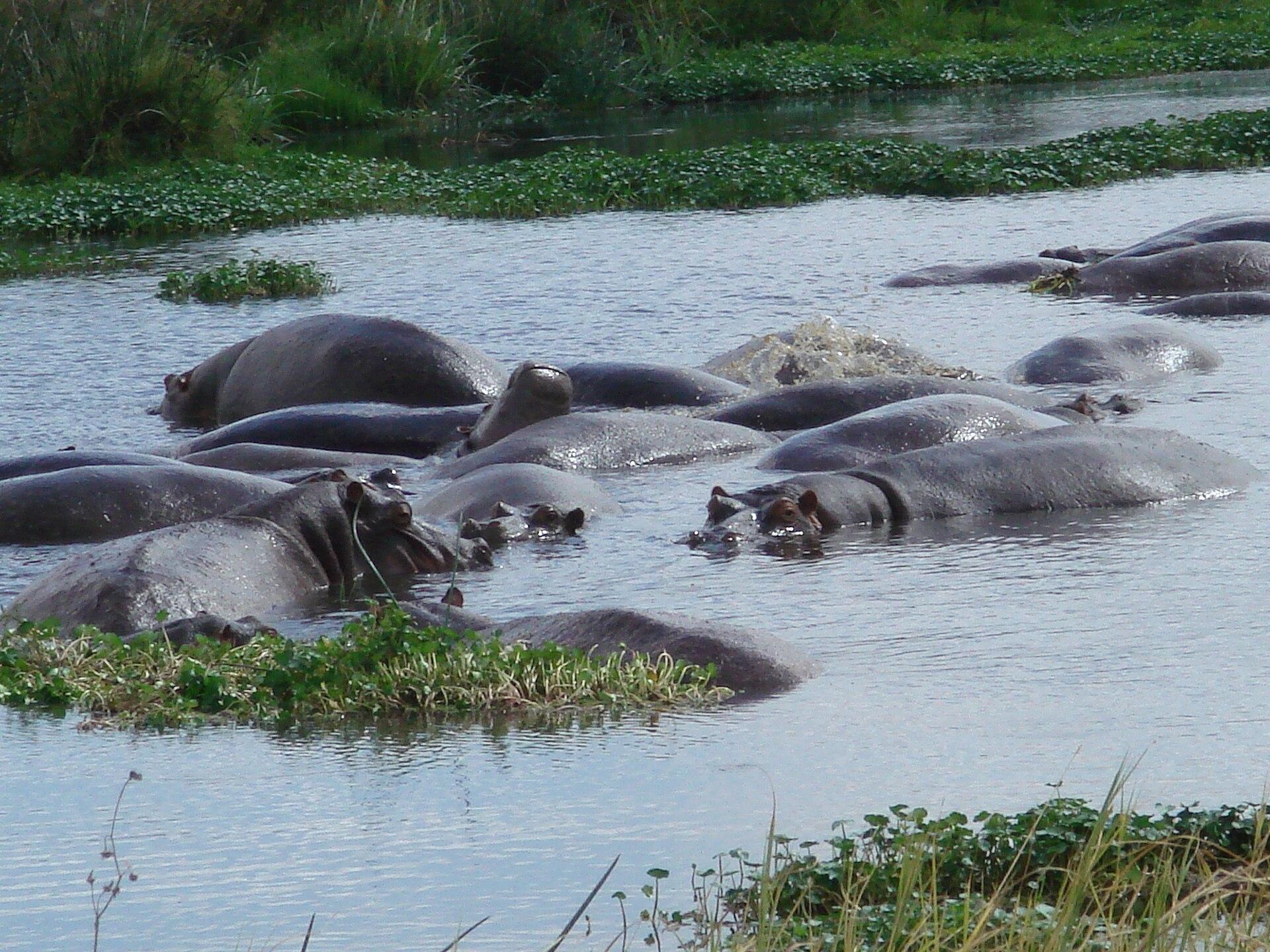
A collapsed volcano 20 km across holding roughly 25,000 large animals inside its walls, year round.
Ngorongoro is the largest intact volcanic caldera in the world: a bowl about 20 kilometres wide and 600 metres deep, formed when a mountain thought to have rivalled Kilimanjaro collapsed some two and a half million years ago. Grassland, swamp, soda lake and a small yellow-fever acacia forest sit inside the walls, and because there is permanent water and grazing the animals do not need to migrate. The result is a density found almost nowhere else - lion, elephant, buffalo, hippo, flamingo, and one of the last reliable places in Tanzania to see black rhino. The wider Ngorongoro Conservation Area is not a national park but a multiple land-use area where Maasai families graze cattle alongside wildlife, and it also contains Olduvai Gorge, where the Leakeys' excavations rewrote the early human record. The crater floor is open to vehicles for a limited window each day and can feel busy; the rim, the highlands and Empakaai and Olmoti craters are quieter.
Karatu · Tanzania
Mwanza · Tanzania
Arusha · Tanzania
Arusha · Tanzania
Arusha · Tanzania
Arusha · Tanzania
Places and experiences rather than companies. Each one carries the thing you would otherwise find out by turning up.
Six hundred metres down, roughly 25,000 large animals inside twenty kilometres of caldera wall.
The descent is charged per vehicle, not per person, and the permit is for six hours — so a full car costs each of you less, and the clock starts at the gate rather than at the bottom.
Half a dayPaid
Where the Leakeys found the fossils that moved human origins to East Africa.
It sits on the road between Ngorongoro and the Serengeti, so it costs an hour rather than a day if you time it as a stop rather than a detour.
2 hoursPaid
A steep descent to a soda lake inside a smaller, greener caldera.
One of the few places in the conservation area you may walk, with a ranger. On a clear morning Ol Doinyo Lengai and Kilimanjaro are both visible from the rim.
5 hoursPaid
60 listings with a mapped location.
All-in on the ground, per person per day, excluding international flights. Ranges rather than a single figure, because accommodation and group size move the total more than anything else.
| Style | Per person, per day |
|---|---|
| Camping or budget lodge, shared vehicle | $190 – $260 |
| Mid-range lodge | $260 – $470 |
| Luxury camp, private vehicle | $700 – $1,500 |
Of that, $110 – $180 a day is government fees set by Ngorongoro Conservation Area Authority. Every operator pays the same, so a quote below this floor is not a better deal — it is a different trip.
Ngorongoro Crater descent, per vehicle: $295
Add this to a whole-trip estimate
Indicative figures checked for 2026. Park fees are revised annually and some are quoted before VAT — confirm current rates with your operator or the park authority before you book.
Month by month: wildlife, weather and how busy it gets.
Dry season — good roads, thinner bush, animals gathering at water.
| Best time to visit | Wildlife | Weather | Crowds | Rainfall | Temperature |
|---|---|---|---|---|---|
| JanuaryThe crater holds its game year-round — no season to miss. | Wildlife: 5 / 5 | Weather: 4 / 5 | Crowds: 3 / 5 | 60 mm | 9–22 °C |
| FebruaryPeak seasonDry season — good roads, thinner bush, animals gathering at water. | Wildlife: 5 / 5 | Weather: 4 / 5 | Crowds: 4 / 5 | 55 mm | 9–22 °C |
| MarchWet month — expect rain most days, and lush, difficult country. | Wildlife: 4 / 5 | Weather: 3 / 5 | Crowds: 2 / 5 | 110 mm | 9–21 °C |
| AprilLong rains — some tracks impassable and some camps closed. Lowest prices. | Wildlife: 4 / 5 | Weather: 2 / 5 | Crowds: 2 / 5 | 200 mm | 9–20 °C |
| MayLong rains — some tracks impassable and some camps closed. Lowest prices. | Wildlife: 4 / 5 | Weather: 2 / 5 | Crowds: 2 / 5 | 150 mm | 8–20 °C |
| JuneCold, clear mornings on the rim; excellent visibility below. | Wildlife: 5 / 5 | Weather: 5 / 5 | Crowds: 4 / 5 | 30 mm | 7–20 °C |
| JulyPeak seasonPeak dry season — the best game viewing and the highest prices. | Wildlife: 5 / 5 | Weather: 5 / 5 | Crowds: 5 / 5 | 10 mm | 7–19 °C |
| AugustPeak seasonPeak dry season — the best game viewing and the highest prices. | Wildlife: 5 / 5 | Weather: 5 / 5 | Crowds: 5 / 5 | 10 mm | 7–19 °C |
| SeptemberPeak seasonPeak dry season — the best game viewing and the highest prices. | Wildlife: 5 / 5 | Weather: 5 / 5 | Crowds: 4 / 5 | 15 mm | 8–21 °C |
| OctoberDry season — good roads, thinner bush, animals gathering at water. | Wildlife: 5 / 5 | Weather: 4 / 5 | Crowds: 3 / 5 | 40 mm | 9–22 °C |
| NovemberWet month — expect rain most days, and lush, difficult country. | Wildlife: 4 / 5 | Weather: 3 / 5 | Crowds: 2 / 5 | 105 mm | 9–21 °C |
| DecemberShort rains — brief afternoon storms, green landscapes, fewer visitors. | Wildlife: 5 / 5 | Weather: 4 / 5 | Crowds: 4 / 5 | 90 mm | 9–22 °C |