
Same · Tanzania
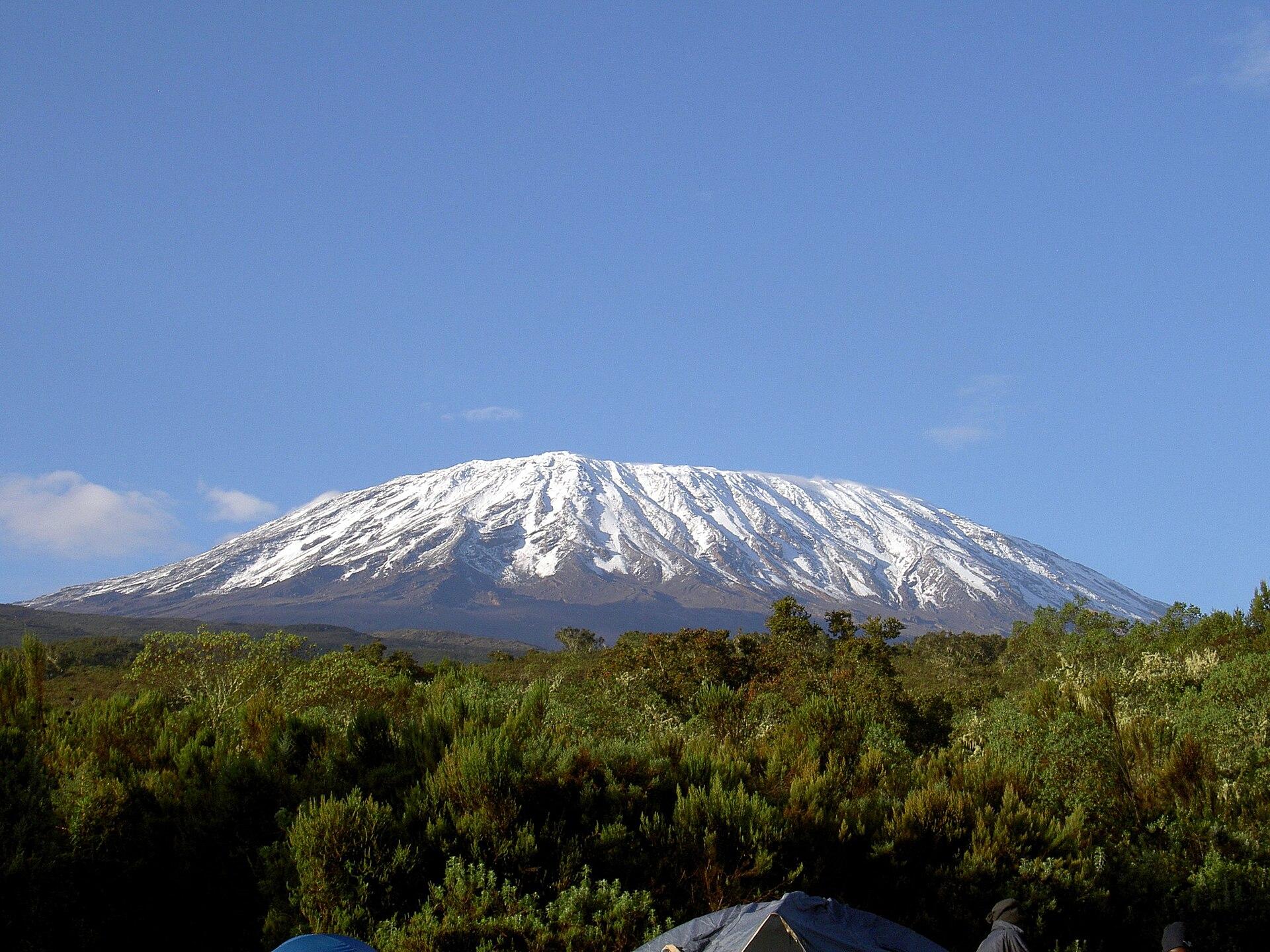
Africa's highest mountain - and the only 5,895 m summit most fit walkers can reach without ropes.
Kilimanjaro rises alone out of the plains of northern Tanzania to 5,895 metres, a dormant volcano with three cones - Kibo, Mawenzi and Shira - and the highest point on the African continent. It is a walk rather than a climb: no technical skill is required to reach Uhuru Peak, which is exactly why so many people underestimate it. The mountain passes through five climate zones in a few days, from cultivated foothills and rainforest through heather and moorland to alpine desert and, at the top, an arctic zone of glaciers that have been retreating for a century. Seven routes lead up. Machame and Lemosho are the scenic ones and give the best acclimatisation profile; Marangu is the only route with huts; the Northern Circuit is the longest and has the highest success rate; Umbwe is steep and best left to people who know what they are doing. Success depends far more on the number of nights spent gaining altitude than on raw fitness.
Same · Tanzania
Moshi · Tanzania
Mwanza · Tanzania
Arusha · Tanzania
Kilimanjaro · Tanzania
Kilimanjaro · Tanzania
Places and experiences rather than companies. Each one carries the thing you would otherwise find out by turning up.
Africa’s highest point at 5,895m, reachable on foot without ropes.
Summit night starts around midnight so you reach the crater rim at sunrise. Route length matters far more than fitness: eight days succeeds around 85% of the time, five days under half.
7 daysPaid
A high moorland on the western approach, above the forest and below the scree.
The Lemosho and Shira routes cross it, which is part of why they acclimatise better — you spend a day near 3,800m instead of climbing straight through.
1 daysPaid
A waterfall on the lower slopes, usually combined with a Chagga coffee farm.
The standard rest-day trip from Moshi, and the best thing to do on the day before a climb when you should not be exerting yourself at altitude.
5 hoursPaid
60 listings with a mapped location.
All-in on the ground, per person per day, excluding international flights. Ranges rather than a single figure, because accommodation and group size move the total more than anything else.
| Style | Per person, per day |
|---|---|
| Camping or budget lodge, shared vehicle | $180 – $240 |
| Mid-range lodge | $240 – $380 |
| Luxury camp, private vehicle | $450 – $900 |
Of that, $110 – $160 a day is government fees set by TANAPA. Every operator pays the same, so a quote below this floor is not a better deal — it is a different trip.
Typical 7-day climb, per person: $2,200
Add this to a whole-trip estimate
Indicative figures checked for 2026. Park fees are revised annually and some are quoted before VAT — confirm current rates with your operator or the park authority before you book.
Month by month: wildlife, weather and how busy it gets.
Dry season — good roads, thinner bush, animals gathering at water.
| Best time to visit | Wildlife | Weather | Crowds | Rainfall | Temperature |
|---|---|---|---|---|---|
| JanuaryPeak seasonPrime climbing window — clear, cold, and busy. | — | Weather: 4 / 5 | Crowds: 4 / 5 | 60 mm | 8–23 °C |
| FebruaryPeak seasonWarmest of the good months; excellent summit visibility. | — | Weather: 4 / 5 | Crowds: 4 / 5 | 55 mm | 8–23 °C |
| MarchWet month — expect rain most days, and lush, difficult country. | — | Weather: 3 / 5 | Crowds: 2 / 5 | 110 mm | 8–22 °C |
| AprilWettest month on the mountain — most operators advise against it. | — | Weather: 2 / 5 | Crowds: 1 / 5 | 200 mm | 8–21 °C |
| MayLong rains — some tracks impassable and some camps closed. Lowest prices. | — | Weather: 2 / 5 | Crowds: 1 / 5 | 150 mm | 7–21 °C |
| JunePeak dry season — the best game viewing and the highest prices. | — | Weather: 5 / 5 | Crowds: 3 / 5 | 30 mm | 6–21 °C |
| JulyPeak seasonPeak dry season — the best game viewing and the highest prices. | — | Weather: 5 / 5 | Crowds: 5 / 5 | 10 mm | 6–20 °C |
| AugustPeak seasonThe second climbing season, and the busiest. | — | Weather: 5 / 5 | Crowds: 5 / 5 | 10 mm | 6–20 °C |
| SeptemberPeak seasonDry and stable, with the crowds beginning to thin. | — | Weather: 5 / 5 | Crowds: 4 / 5 | 15 mm | 7–22 °C |
| OctoberDry season — good roads, thinner bush, animals gathering at water. | — | Weather: 4 / 5 | Crowds: 3 / 5 | 40 mm | 8–23 °C |
| NovemberWet month — expect rain most days, and lush, difficult country. | — | Weather: 3 / 5 | Crowds: 2 / 5 | 105 mm | 8–22 °C |
| DecemberShort rains — brief afternoon storms, green landscapes, fewer visitors. | — | Weather: 4 / 5 | Crowds: 4 / 5 | 90 mm | 8–23 °C |
Mount Kilimanjaro is on nearly every itinerary, which is both why it is good and why it is busy. These are the places travellers choose when they want the same thing with fewer vehicles — each with what it costs you to go there instead.
Glaciers on the equator, and a trek through giant lobelia and groundsel that looks like nowhere else on earth. Margherita Peak is a mountaineering objective rather than a long walk uphill.
The trade-off: Wet, cold and muddy for most of its length, harder than Kilimanjaro, and the summit needs rope and crampons. Success rates are far lower, and the line about Africa’s highest point belongs to the other mountain.
Plan a trip to Rwenzori Mountains National ParkAn active volcano you climb overnight and come down from by breakfast, above a soda lake that turns pink with flamingo. No week of acclimatisation, no booking a year out, and the summit is a crater still building itself.
The trade-off: It is a brutal night on loose ash with a real gradient, and nobody hands you a certificate at the end. The road in is punishing on vehicles, and the flamingos follow the water rather than the calendar.
Plan a trip to Lake Natron and Ol Doinyo Lengai