
Athi River · Kenya
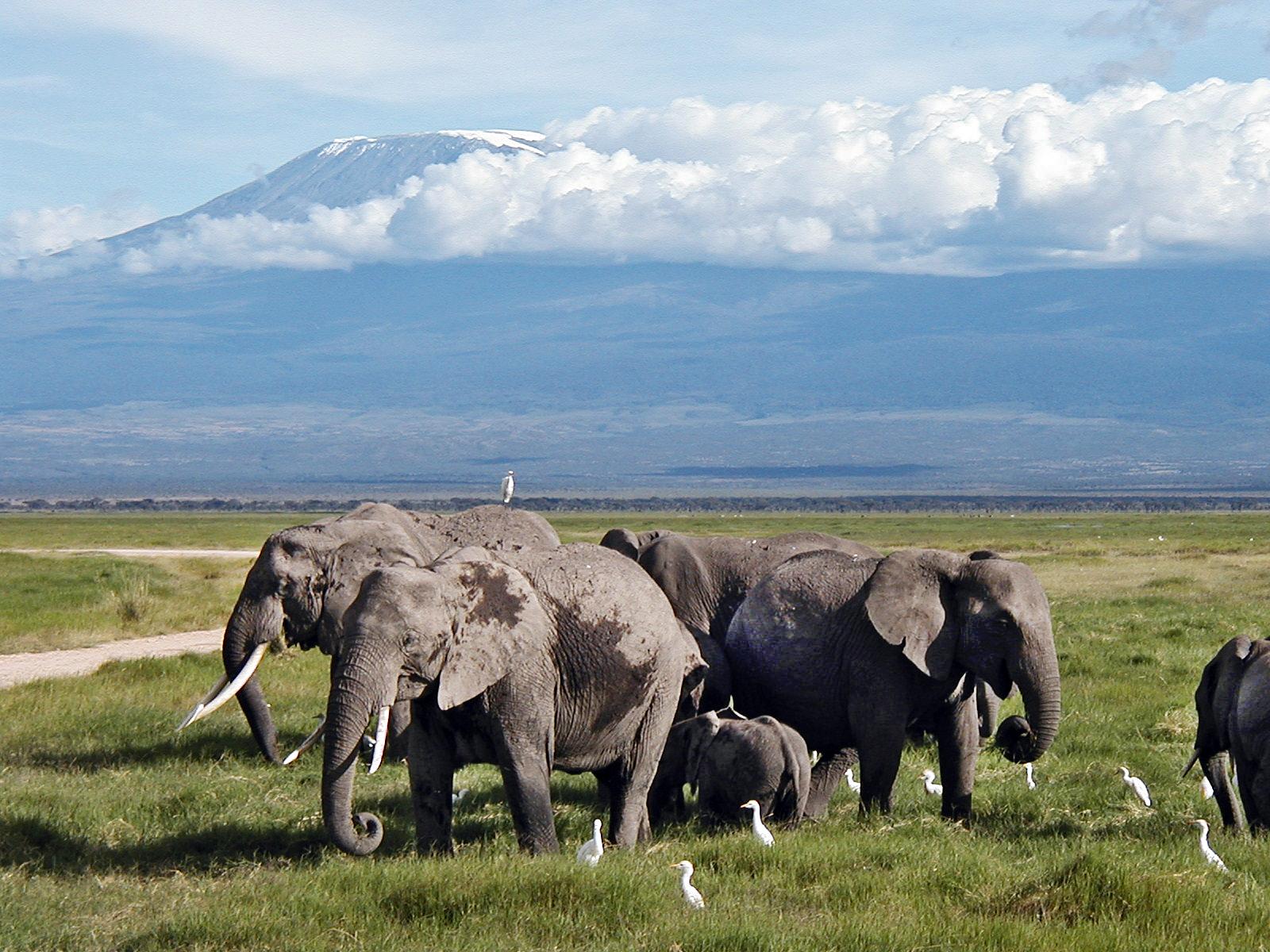
Elephants in the open, with Kilimanjaro filling the sky behind them.
Amboseli is small - around 390 square kilometres - and its fame rests on a single, unmatched combination: large elephant herds moving across open, dust-pale country with the snow cap of Kilimanjaro rising directly behind. The mountain is in Tanzania, but the classic view of it belongs to Kenya. Amboseli sits on the bed of a drained Pleistocene lake, and underground water from Kilimanjaro's melt feeds permanent swamps at Enkongo Narok and Ol Okenya, which is why the wildlife stays through the dry season. Its elephants are among the most studied in the world - Cynthia Moss's Amboseli Trust has followed named individuals across five decades - and the population includes some of the last big-tusked bulls in East Africa. The open ground makes for exceptional photography and easy viewing of lion, cheetah, buffalo and over 400 bird species, though the park's small size means vehicles concentrate. Maasai group ranches surround it and offer quieter alternatives.
Athi River · Kenya

Kimana · Kenya

Namanga · Kenya
Places and experiences rather than companies. Each one carries the thing you would otherwise find out by turning up.
The one place in the park you may leave the vehicle, overlooking the swamps.
Late afternoon, when Kilimanjaro most often clears. The mountain is hidden by cloud most of the middle of the day, all year.
60 min
Enkongo Narok and Olokenya, where the big families feed.
Amboseli’s elephants are among the most studied on earth and unusually relaxed around vehicles, which is why the photographs from here look the way they do.
3 hours
3 listings with a mapped location.
All-in on the ground, per person per day, excluding international flights. Ranges rather than a single figure, because accommodation and group size move the total more than anything else.
| Style | Per person, per day |
|---|---|
| Camping or budget lodge, shared vehicle | $160 – $230 |
| Mid-range lodge | $230 – $420 |
| Luxury camp, private vehicle | $600 – $1,200 |
Of that, $60 – $110 a day is government fees set by Kenya Wildlife Service. Every operator pays the same, so a quote below this floor is not a better deal — it is a different trip.
Add this to a whole-trip estimate
Indicative figures checked for 2026. Park fees are revised annually and some are quoted before VAT — confirm current rates with your operator or the park authority before you book.
Month by month: wildlife, weather and how busy it gets.
Dry season — good roads, thinner bush, animals gathering at water.
| Best time to visit | Wildlife | Weather | Crowds | Rainfall | Temperature |
|---|---|---|---|---|---|
| JanuaryPeak seasonClearest Kilimanjaro views of the year, early morning. | Wildlife: 4 / 5 | Weather: 4 / 5 | Crowds: 3 / 5 | 40 mm | 15–31 °C |
| FebruaryPeak seasonDry season — good roads, thinner bush, animals gathering at water. | Wildlife: 4 / 5 | Weather: 4 / 5 | Crowds: 3 / 5 | 30 mm | 16–32 °C |
| MarchShort rains — brief afternoon storms, green landscapes, fewer visitors. | Wildlife: 3 / 5 | Weather: 3 / 5 | Crowds: 2 / 5 | 80 mm | 16–32 °C |
| AprilLong rains — some tracks impassable and some camps closed. Lowest prices. | Wildlife: 3 / 5 | Weather: 2 / 5 | Crowds: 1 / 5 | 150 mm | 16–30 °C |
| MayShort rains — brief afternoon storms, green landscapes, fewer visitors. | Wildlife: 3 / 5 | Weather: 3 / 5 | Crowds: 1 / 5 | 60 mm | 15–30 °C |
| JunePeak dry season — the best game viewing and the highest prices. | Wildlife: 4 / 5 | Weather: 5 / 5 | Crowds: 3 / 5 | 10 mm | 13–28 °C |
| JulyPeak seasonBig elephant families on the swamps. | Wildlife: 5 / 5 | Weather: 5 / 5 | Crowds: 4 / 5 | 5 mm | 12–27 °C |
| AugustPeak seasonPeak dry season — the best game viewing and the highest prices. | Wildlife: 5 / 5 | Weather: 5 / 5 | Crowds: 4 / 5 | 5 mm | 13–28 °C |
| SeptemberPeak dry season — the best game viewing and the highest prices. | Wildlife: 5 / 5 | Weather: 5 / 5 | Crowds: 4 / 5 | 10 mm | 14–30 °C |
| OctoberDry season — good roads, thinner bush, animals gathering at water. | Wildlife: 4 / 5 | Weather: 4 / 5 | Crowds: 3 / 5 | 40 mm | 15–32 °C |
| NovemberWet month — expect rain most days, and lush, difficult country. | Wildlife: 3 / 5 | Weather: 2 / 5 | Crowds: 2 / 5 | 130 mm | 16–30 °C |
| DecemberShort rains — brief afternoon storms, green landscapes, fewer visitors. | Wildlife: 4 / 5 | Weather: 3 / 5 | Crowds: 3 / 5 | 80 mm | 15–30 °C |
Amboseli National Park is on nearly every itinerary, which is both why it is good and why it is busy. These are the places travellers choose when they want the same thing with fewer vehicles — each with what it costs you to go there instead.
Volcanic country with lava flows, the underwater hide at Mzima Springs, and elephants stained red by the dust. Vast enough that you can drive an hour without meeting another vehicle.
The trade-off: The bush is thick and the park is enormous, so game viewing is real work next to Amboseli’s open pans. Kilimanjaro shows itself here too, but less reliably and from further away.
Plan a trip to Tsavo West National Park